Magnolia Weight Loss · Educational Guide
High-Protein Diets and Weight Loss: What to Know
Last Updated: November 17, 2026
High-protein eating remains one of the most popular weight-management approaches. This guide covers why protein gets attention, common sources, and what individual needs look like.
Why Protein Gets Attention
Protein is often discussed because it may help people feel fuller for longer and supports muscle maintenance. Research continues, and individual responses vary. No single macronutrient ratio guarantees weight loss.
Common Protein Sources
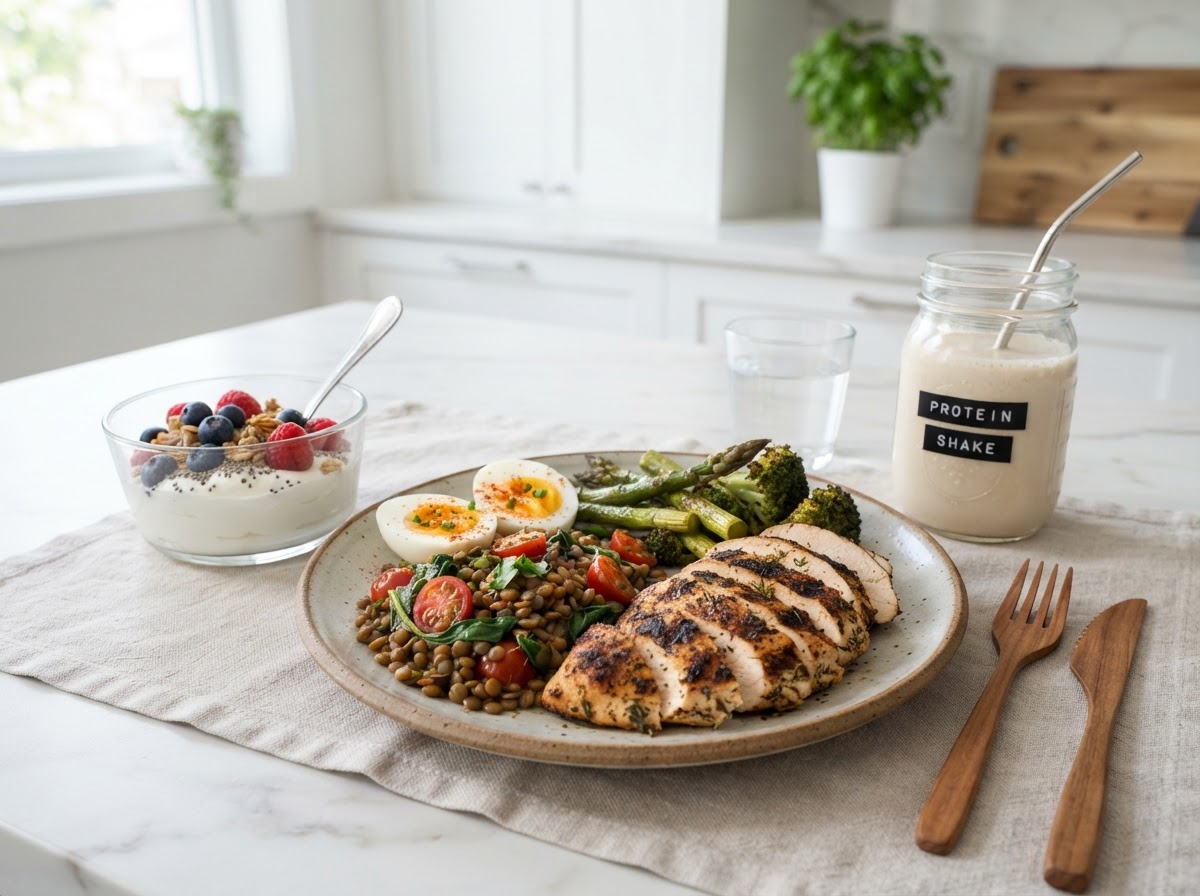
Popular sources include chicken, turkey, fish, eggs, Greek yogurt, cottage cheese, tofu, tempeh, legumes, and protein shakes. Variety can help make an eating pattern sustainable. Individual needs and preferences vary.
How Much Protein People Eat
Typical recommendations vary by individual factors like body size, activity, and health conditions. Very high intakes are not appropriate for everyone, particularly people with certain kidney conditions. A licensed provider can help determine a level appropriate for you.
Protein Within a Bigger Plan
Protein is one part of an overall approach that can include balanced meals, movement, sleep, and, when clinically appropriate, medical support. A licensed provider determines whether treatment is appropriate. No outcome is guaranteed.
Interactive Weight-Loss Calculators
Quick estimates to explore your goals. For educational use only — not medical advice.
27.4
Overweight
BMI is a screening tool only. A licensed provider determines clinical eligibility. This is not medical advice.
Fun Facts
- • Protein helps maintain muscle, which is especially discussed during weight loss.
- • Common high-protein foods include chicken, fish, eggs, Greek yogurt, tofu, and lentils.
- • Protein needs vary by body size, activity level, and individual health factors.
Did You Know?
- • Did you know there is no single protein target that is right for everyone?
- • Did you know a licensed provider can help determine an appropriate protein level for you?
- • Did you know protein may help with feelings of fullness, but no diet guarantees weight loss?
Ready to See If You Qualify?
Complete a quick 20-second survey to see if you may qualify for medical weight loss. No obligation to enroll.
Frequently Asked Questions
How much protein should I eat to lose weight?
There is no single right amount — needs vary by body size, activity, and health conditions. A licensed provider can help determine an appropriate level for you. No diet guarantees weight loss.
Are protein shakes good for weight loss?
Protein shakes are convenient supplements, not magic solutions. They may help some people meet protein goals. Individual results vary, and whole foods are often emphasized as a foundation.
Can eating more protein guarantee I lose weight?
No. Individual results vary and no specific amount of weight loss is guaranteed. Overall eating patterns, activity, and clinical guidance matter.
Important Disclosure
Individual weight-loss results vary. Magnolia Weight Loss does not guarantee any specific amount of weight loss, a particular medication, or a prescription. Treatment is provided only when determined clinically appropriate by a licensed healthcare provider. The information in this article is for general educational purposes only and is not a substitute for professional medical advice, diagnosis, or treatment.
Related Articles



Ready to Speak With Someone About Your Goals?
Text us for a quick instant response with instant pricing. We're open 24/7.
support@magnoliaweightloss.comOpen 24/7